Email: myemail@email.com
Request a quote
Where vacuum pumps actually earn their keep

We do not sell pumps for "general use." Every pump we ship goes into something specific.

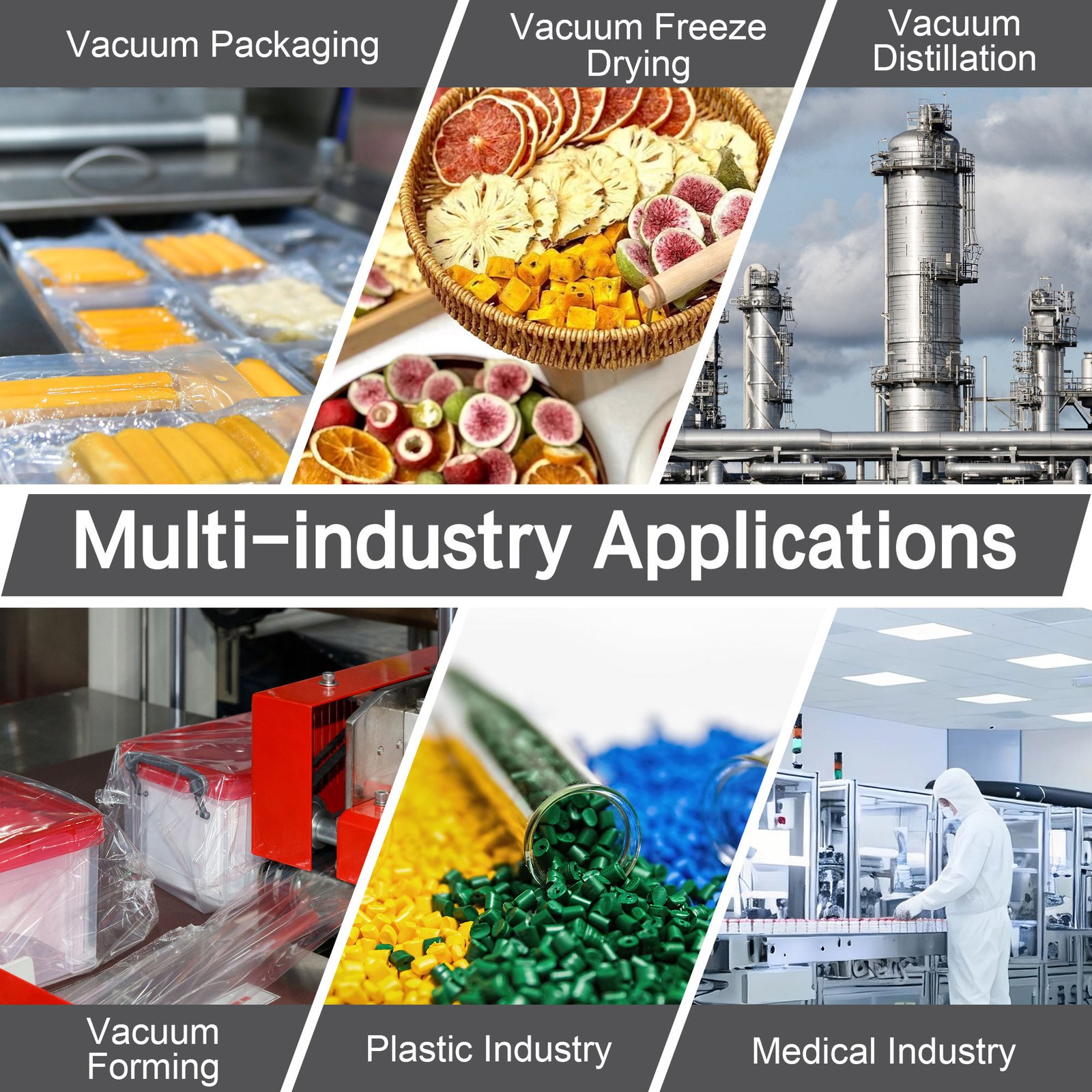
Below are the eight industries where our pumps show up most often. These are not theoretical use cases from a brochure — they are based on what our customers actually do, and what they tell us when they reorder. If your application is not listed, that does not mean our pumps will not work. It just means nobody has asked us about it yet.

Pharmaceutical

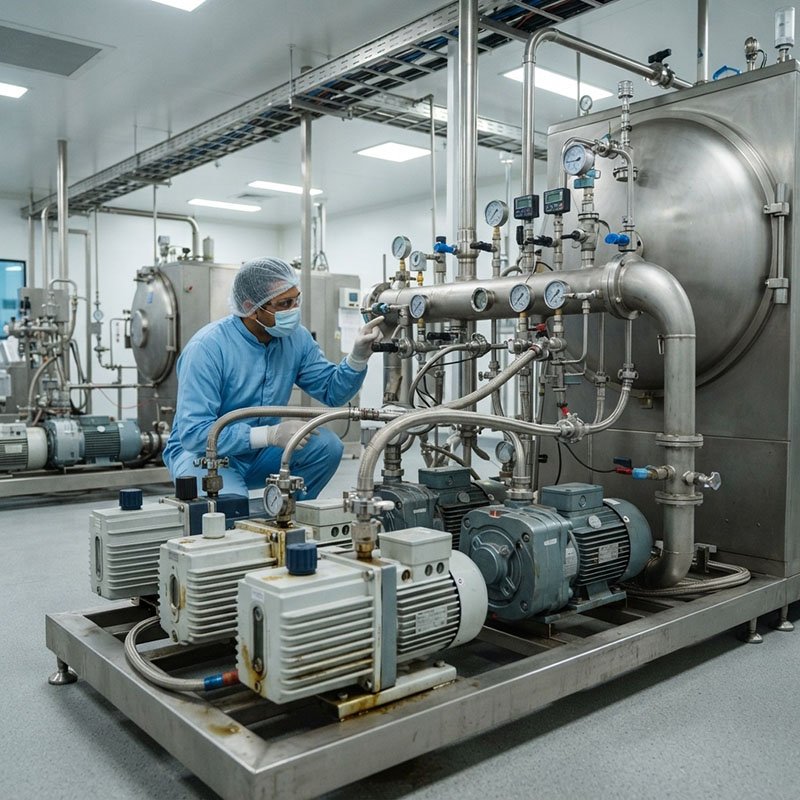
Freeze drying (lyophilization). This is the big one for us. You pull vacuum on frozen vials to sublimate water out without melting the product. The vacuum level determines how fast the cycle runs and whether the cake structure holds up. Get it wrong and you have collapsed cake — a batch rejection.
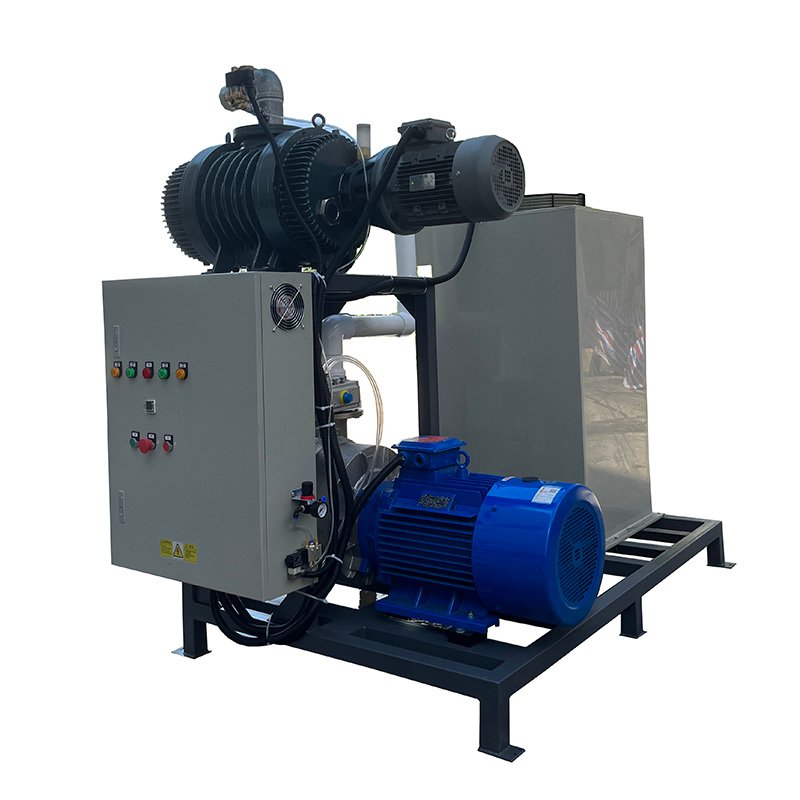
We have a generics manufacturer in Mumbai running twelve of our RV series pumps on a single lyophilization manifold. They run 24 hours a day during production campaigns. The pumps are paired two-to-one with roots boosters on the larger chambers. They change oil every 600 hours and rebuild the vanes every 18 months. That is the maintenance schedule they figured out, not what we told them.
Other pharma uses: Vacuum distillation (solvent recovery), vacuum coating (tablet film coating), vacuum drying ovens, and sterile filtration setups. For anything that touches oxygen-sensitive APIs, we offer PFPE oil — it does not react. It also costs more than the pump. But an exploded vacuum line costs more than both.
Typical pumps: Rotary vane (RV series) for lab and pilot scale. Screw (SC series) + roots (ZJ series) for production freeze dryers. Piston (VP series) for filtration and aspiration where oil-free matters.

Food Packaging

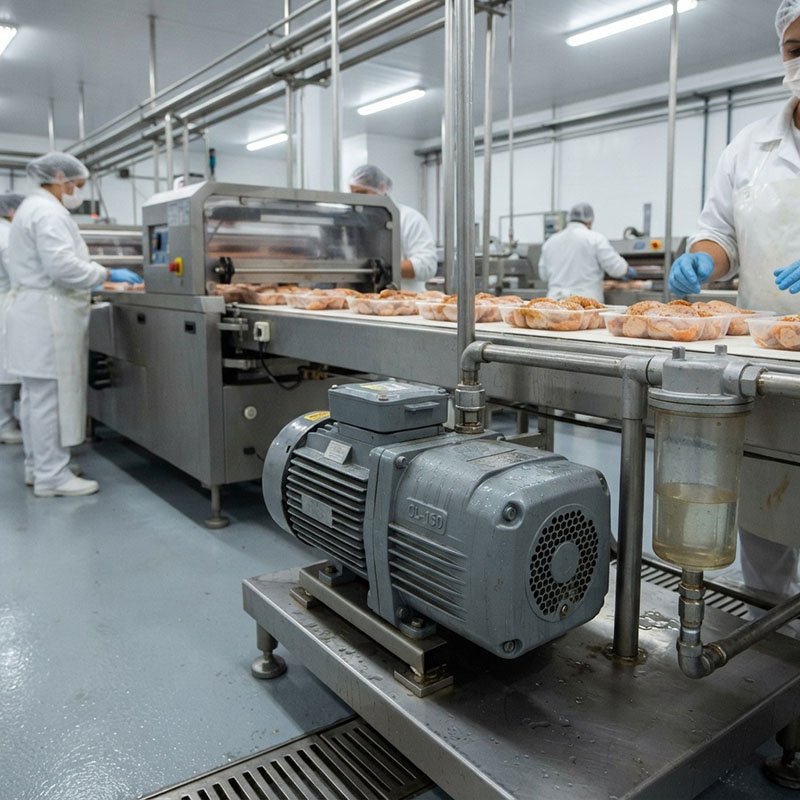
Modified Atmosphere Packaging (MAP). You pull vacuum on a tray, flush it with nitrogen or CO₂, seal it. The meat stays red longer. The salad stays crisp. This is one of the most punishing environments for a vacuum pump — moisture, fat aerosols, small meat particles, and a production line that runs 16-20 hours a day, six days a week.
Rotary vane pumps die fast in meat plants. The oil emulsifies with water and grease within days. We learned this the expensive way — shipping replacement pumps to a poultry processor in Brazil three times before the plant engineer called and asked "do you make anything dry?" We sent a CL-150 claw pump. That was four years ago. Same pump is still running. They bought four more.
Vacuum sealing and thermoforming. Smaller operations — bakeries, coffee roasters, cheese producers — run rotary vane pumps with gas ballast and a moisture trap upstream. Works fine if you change the oil. The problem is most people do not. So we default to recommending claw pumps for anything that runs more than one shift.
Typical pumps: Claw (CL series) for MAP and continuous-duty packaging. Rotary vane (RV series) for intermittent sealing. Roots boosters for central vacuum systems supplying multiple packaging stations.

Semiconductor

Wafer processing and deposition. This is the highest-spec work we do. Everything runs dry. Everything runs clean. No hydrocarbons anywhere near the process chamber. You cannot put an oil-lubricated pump on a PECVD tool and expect yield numbers to stay where your customer wants them.
We are not in TSMC's fab. We are in the tier-2 equipment suppliers — the companies that build the vacuum ovens, the sputtering systems, the leak-test stations, the wafer-handling robots that need vacuum chucks. A Taiwanese automation company has been buying our SC-250 screw pumps for three years. They build wafer-inspection stations. Each station gets one screw pump plus a small roots booster. They order in batches of 20 every quarter. We keep a dedicated production slot for them.
Load-lock chambers. These are the small chambers that transfer wafers between atmosphere and process vacuum. Fast cycle time matters more than ultimate vacuum. We usually recommend screw pumps here — they pump down fast, they tolerate some particulate, and they do not have oil to backstream.
Typical pumps: Screw (SC series) for clean process vacuum. Roots + screw combinations for high-throughput chambers. Claw (CL series) for less critical sub-fab roughing.

Chemical Processing

Distillation under vacuum. You lower the pressure to lower the boiling point. This lets you distill heat-sensitive compounds without cooking them. We see this in fine chemical plants, fragrance extraction, and solvent recovery operations. The pump has to handle whatever vapor makes it past the condenser — and in a real plant, something always makes it past the condenser.
A specialty chemical plant in Gujarat runs five SC-600 screw pumps on distillation columns. They are pulling toluene, acetone, and the occasional chlorinated solvent. The pumps run 24 hours a day for six-week production campaigns, then get a teardown inspection during the line changeover. The customer sends us photos of the rotors before every batch. We tell them whether to run another campaign or swap. This has been going on for two years and they have not lost a batch to pump failure yet.
ATEX builds. If you are pulling flammable vapors, we do ATEX-compliant pump assemblies. Explosion-proof motors, conductive PTFE seals, nitrogen-purged bearing housings, the works. These builds take longer — 45 to 60 days — because every component has a paper trail. But they do not catch fire, and that is the point.
Typical pumps: Screw (SC series) for continuous chemical duty. Rotary vane (RV series) for lab-scale chemistry. Claw (CL series) for solvent vapor where oil contamination would ruin the recovered product.

Medical & Laboratory

Central medical vacuum. Hospitals run a vacuum network through the walls — the same way they run oxygen and compressed air. Every ICU bed, every operating theater, every recovery room has a vacuum port on the wall. The pump that drives this network runs continuously. It has to. You do not want the suction to drop during a bronchoscopy.
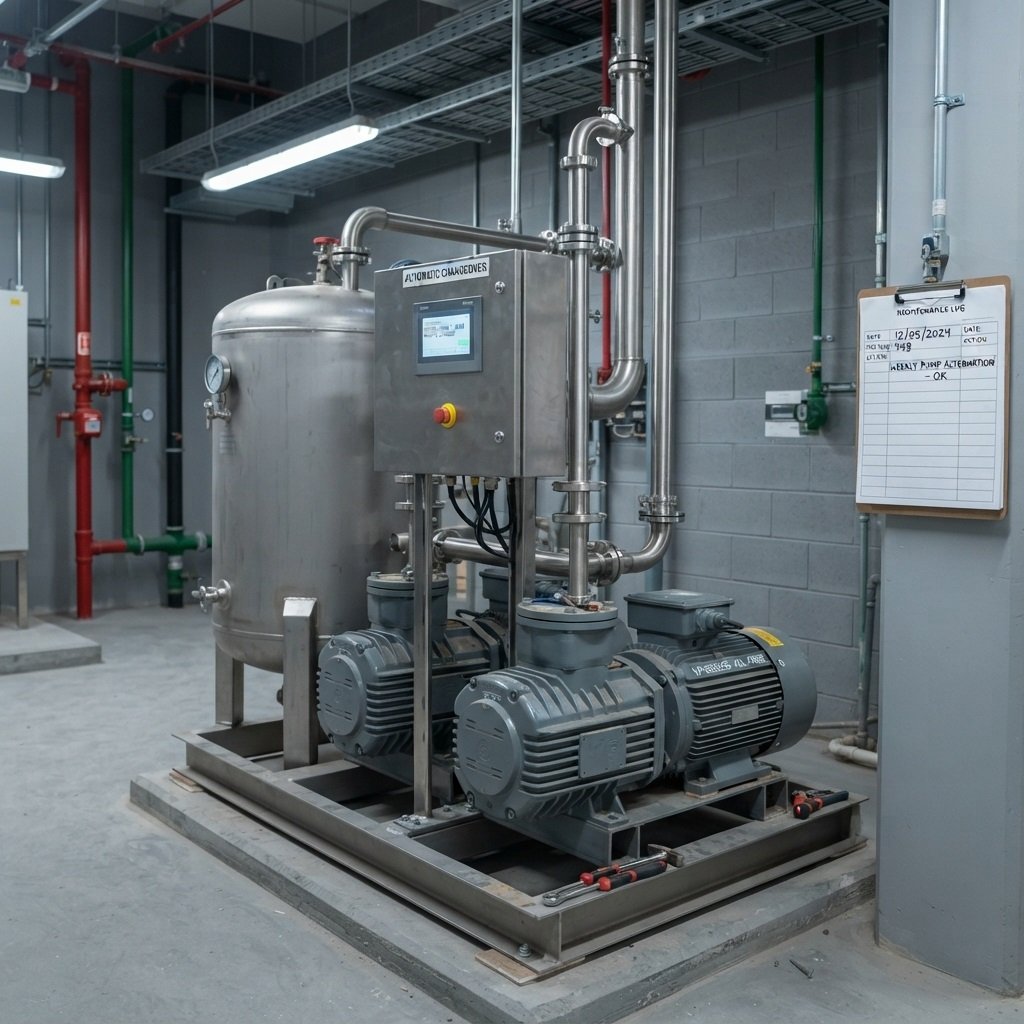
We sell piston pumps into central medical vacuum systems in the Middle East and South Asia. Oil-free is non-negotiable here — no oil mist anywhere near a patient. The VP series tanks sit in a mechanical room in the basement, piped to every floor. We usually ship dual-pump skids with an automatic changeover controller: one pump handles baseline load, the second kicks in when demand spikes. Both pumps alternate weekly so wear stays even.
Dental clinics. Smaller, simpler. One VP-3.0 or VP-6.0 per chair, or one larger pump serving a manifold feeding three or four chairs. The dentist's assistant flips a switch, suction comes on, saliva gets evacuated. Not glamorous. But we have shipped over 2,000 piston pumps to dental distributors, and the repeat order rate tells us they work.
Typical pumps: Piston (VP series) for oil-free medical and dental. Rotary vane (RV series) for lab work — rotary evaporation, vacuum filtration, desiccators.
Woodworking

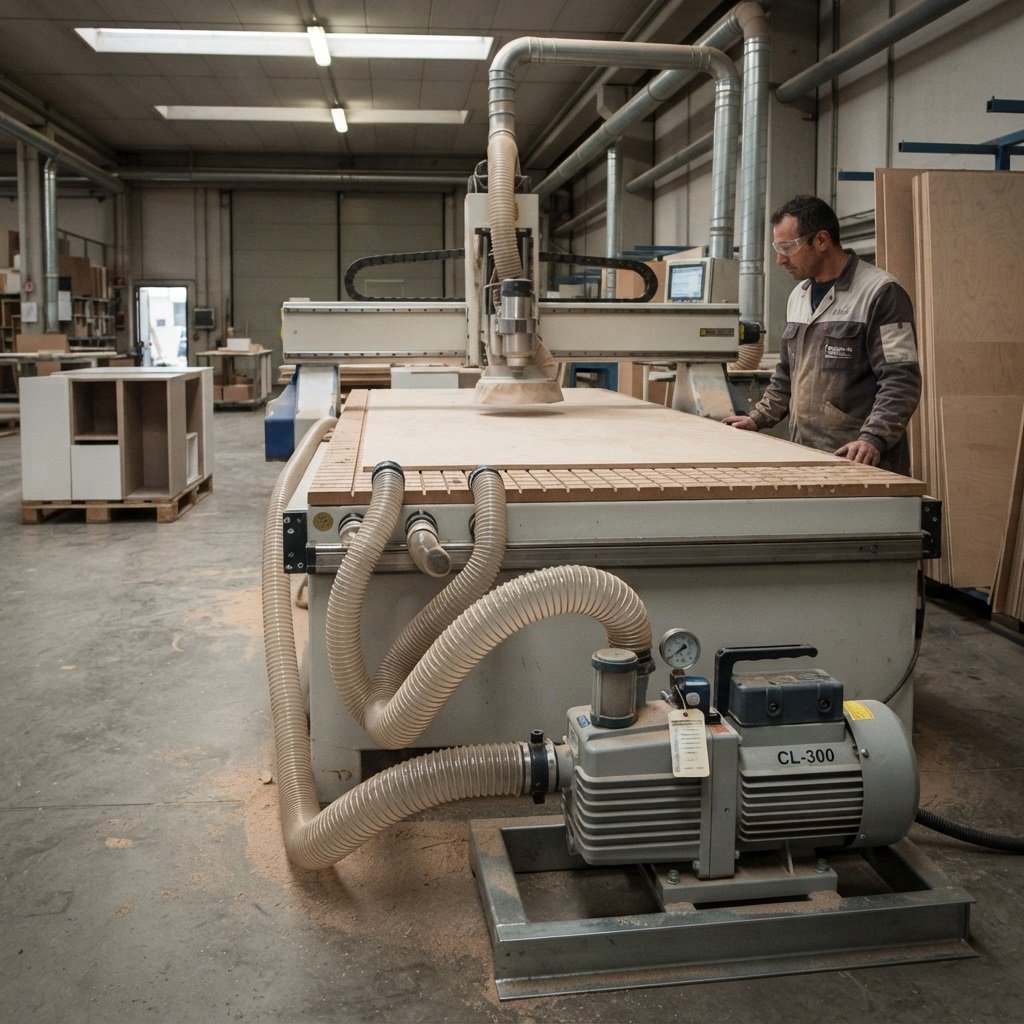
CNC vacuum hold-down. You put a sheet of MDF or plywood on a CNC router bed. A vacuum pump pulls through a grid of small holes in the spoilboard and holds the sheet flat while the spindle cuts. If the vacuum drops, the sheet shifts. If the sheet shifts, the part is scrap.
The pump does not need deep vacuum here. 200-500 mbar absolute is usually enough. What it needs is flow — a lot of it — because wood is porous, MDF is very porous, and you are constantly losing vacuum through the cut paths and the material itself. The pump has to move enough volume to compensate. This is why woodworking shops run claw or roots pumps, not rotary vanes.
A furniture factory in northern Italy runs two CL-300 claw pumps on a five-axis CNC router. The table is 3 meters by 2 meters. They cut nested cabinet parts from 18mm birch ply. The pumps pull about 350 mbar under the sheet while the spindle runs at 18,000 RPM. Dust extraction pulls most of the chips, but some fine dust still gets past the inlet filter. They clean the intake screens once a week. Takes ten minutes.
Typical pumps: Claw (CL series) for high-flow hold-down. Roots boosters (ZJ series) for large-format CNC beds. Rotary vane (RV series) for edge-banding and smaller clamping setups.

HVAC & Refrigeration

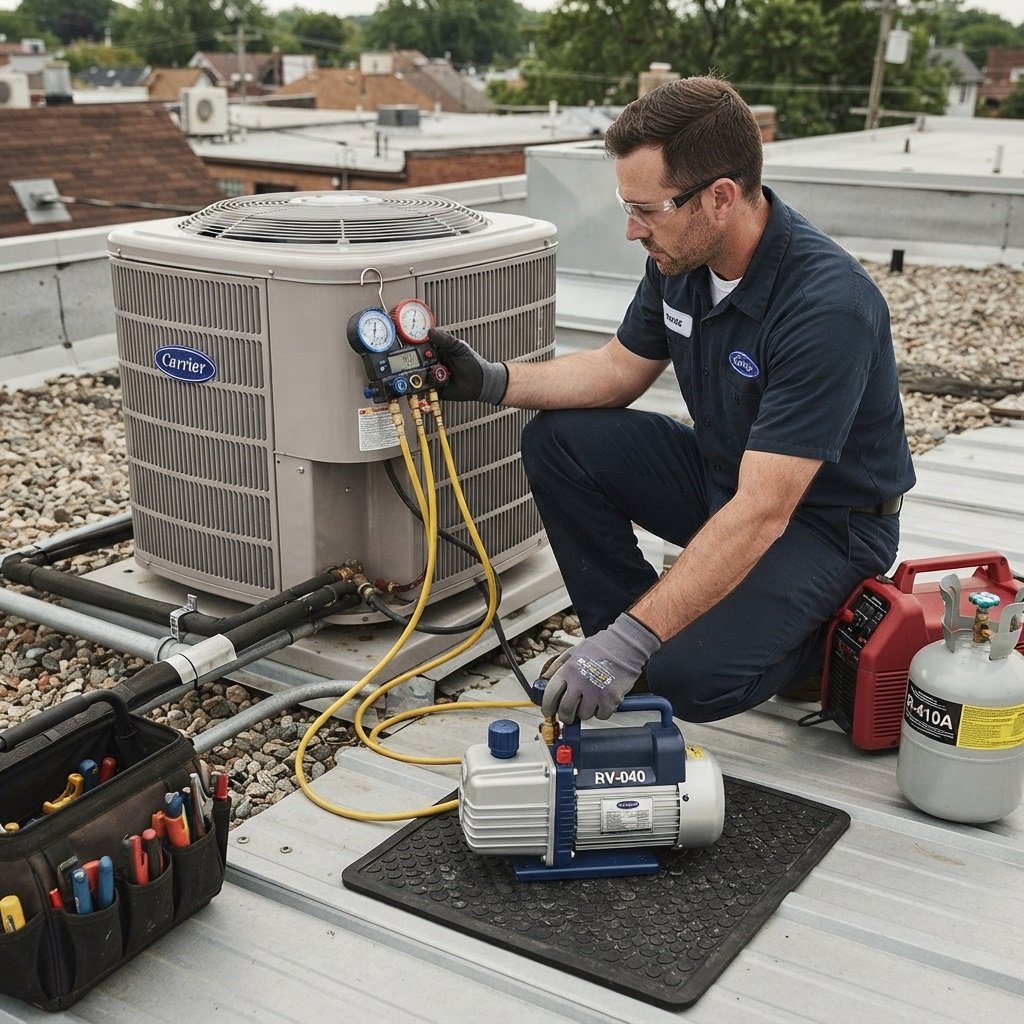
System evacuation and dehydration. Before you charge an HVAC system with refrigerant, you pull a deep vacuum to boil off moisture and remove non-condensables. If you skip this step or do a bad job of it, the moisture turns to acid inside the system. The acid eats the compressor windings. Callback in six months. Warranty claim.
Our RV-020 and RV-040 are the most common pumps for this. The RV-020 pulls about 15 microns on a residential split system in 20-30 minutes. The RV-040 does commercial rooftop units faster because of the higher flow rate. We include a gas ballast — open it during the first five minutes of evacuation when you are pulling the bulk moisture out, then close it to go deep. This is standard procedure. Most HVAC techs learn it the hard way after they change oil three times in one week.
Refrigerant recovery. Pulling old refrigerant out of a system before decommissioning or repair. The pump pushes it into a recovery cylinder. Needs to handle R-22, R-410A, R-32, whatever. The oil in a rotary vane pump will absorb some refrigerant. That is fine — change the oil after the job. If you are doing recovery as a business, get a dedicated recovery machine. A vacuum pump is for evacuation, not continuous recovery.
Typical pumps: Rotary vane (RV-020, RV-040, RV-080) for residential and commercial HVAC evacuation. RV-160 and larger for industrial chiller systems.

Printing & Paper Handling

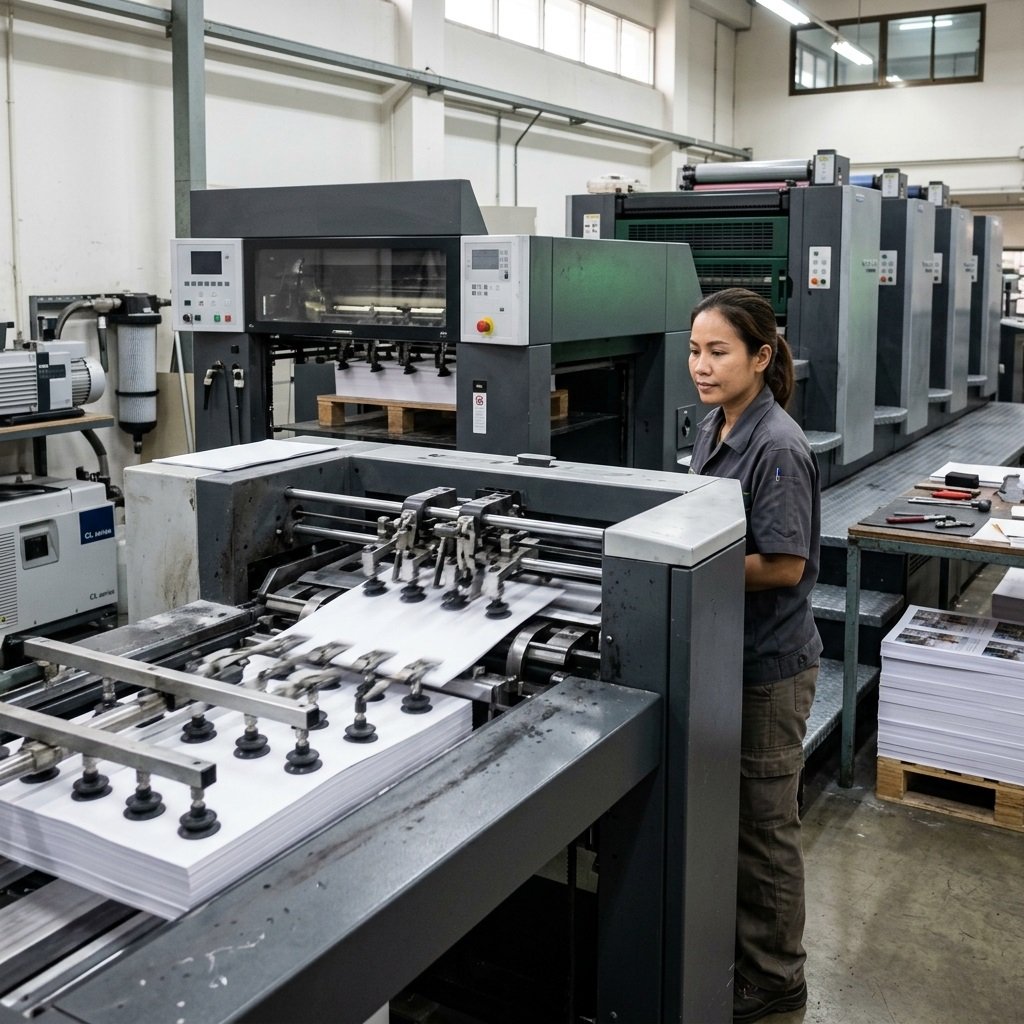
Sheet-fed offset presses. Vacuum suckers pick up a sheet of paper, place it on the feed table, and the grippers take over. This happens 12,000 to 18,000 times per hour on a modern press. The pump has to pull consistently at that cycle rate. If suction flickers, you get misfeeds. Misfeeds stop the press.
Web offset and flexo. Paper runs through the press as a continuous roll. Vacuum holds tension on the web so it does not wander or wrinkle. The pump runs all shift, every shift. It also pulls vacuum on the ink trays for certain configurations. Paper dust gets everywhere — in the pump inlet, in the filters, in the oil if you are running a rotary vane. We usually recommend claw pumps for web presses. No oil to contaminate, and they do not care about paper dust as long as the inlet screen is cleaned.
A commercial printer in Bangkok runs four Heidelbergs with central vacuum supplied by two CL-150 claw pumps and a buffer tank. The pumps alternate duty weekly. They have been running for 14 months — no oil changes, no vane replacements, no downtime that originated at the pumps. The press operator checks the inlet filter during the weekly wash-up. That is it.
Typical pumps: Claw (CL series) for central press vacuum. Rotary vane (RV series) for smaller single-press installations. Piston (VP series) for paper-handling suction cups where oil-free matters.

Your application is not listed?

Tell us what you are trying to pull vacuum on. Flow rate, target pressure, what the gas stream contains. We will tell you honestly whether one of our pumps fits — and which one.
Describe your application

GOFLEXPUMP

GOFLEX SUPPLY CHAIN CO.,LTD.
Dongguan, Guangdong, China
sales@goflexpump.com
ISO 9001:2015 | CE
Copyright © 2026 goflexpump.com. All Rights Reserved
linkedin facebook pinterest youtube rss twitter instagram facebook-blank rss-blank linkedin-blank pinterest youtube twitter instagram