
VB-1800 Series Oil-Free Piston Vacuum Pumps
For automation, vacuum holding, packaging or laboratory suction, provide the gas composition, duty cycle, ambient conditions and installation layout. Confirm connection dimensions, cooling, motor protection, inlet filtration, exhaust arrangements and inspection or service intervals. Oil-free operation does not remove maintenance requirements. Verify continuous-duty capability, noise measurement conditions and supplied accessories for the quoted configuration.
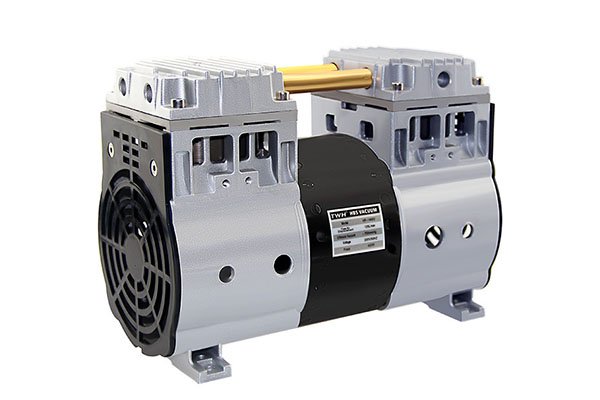
Image Gallery
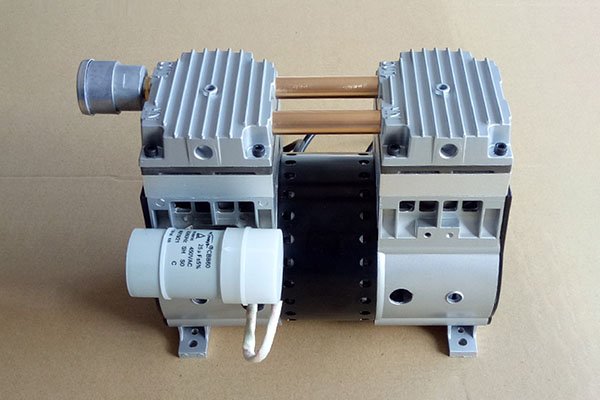
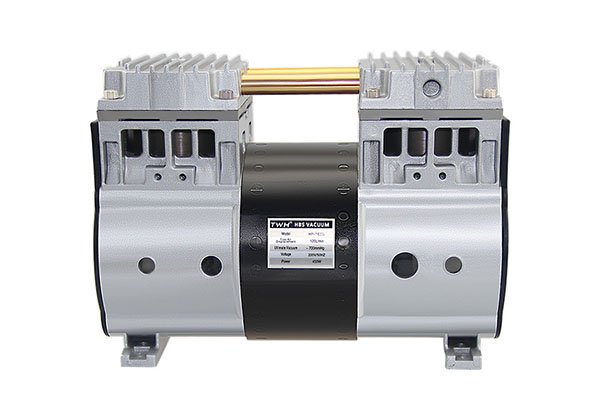
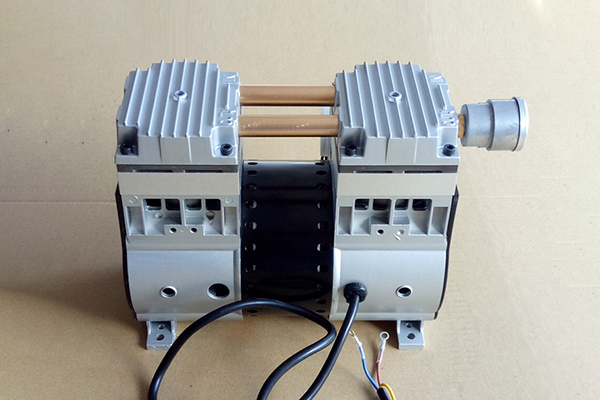
VB Series Technical Specifications (Featuring VB-1800 Specifications)
| Model | Voltage | Freq. | Power | Current | Max Vacuum | Max Flow | Port Size | Noise | Weight |
|---|---|---|---|---|---|---|---|---|---|
| VB-1800V High Airflow | 110V | 60 Hz | 0.59 kW | 5.1 A | -700 mmHg (-93.3 kPa) | 185 L/min | 3/8" NPT/G | 60 dB(A) | 11.0 kg |
| 220V | 50 Hz | 0.55 kW | 2.5 A | 155 L/min | |||||
| VB-1800H High Vacuum | 110V | 60 Hz | 0.58 kW | 5.2 A | -740 mmHg (-98.6 kPa) | 135 L/min | |||
| 220V | 50 Hz | 0.55 kW | 2.5 A | 110 L/min | |||||
| VB-400V | 110V | 50 Hz | 0.24 kW | 2.7 A | -680 mmHg | 50 L/min | 1/4" NPT/G | 56 dB(A) | 6.5 kg |
| 110V | 60 Hz | 0.25 kW | 2.3 A | 60 L/min | |||||
| 220V | 50 Hz | 0.22 kW | 1.1 A | 50 L/min | 7.8 kg | ||||
| 220V | 60 Hz | 0.21 kW | 1.0 A | 60 L/min | |||||
| VB-900V / H | 110V | 60 Hz (V) | 0.19 kW | 1.8 A | -685 mmHg | 95 L/min | 7.85 kg | ||
| 220V | 50 Hz (V) | 0.17 kW | 0.8 A | -685 mmHg | 85 L/min | ||||
| 110V | 60 Hz (H) | 0.23 kW | 2.3 A | -740 mmHg | 68 L/min | ||||
| 220V | 50 Hz (H) | 0.16 kW | 0.7 A | -740 mmHg | 60 L/min | ||||
| VB-1200V / H | 110V | 60 Hz (V) | 0.45 kW | 4.1 A | -700 mmHg | 125 L/min | |||
| 220V | 50 Hz (V) | 0.24 kW | 1.5 A | -700 mmHg | 105 L/min | ||||
| 110V | 60 Hz (H) | 0.30 kW | 2.9 A | -740 mmHg | 95 L/min | ||||
| 220V | 50 Hz (H) | 0.35 kW | 1.5 A | -740 mmHg | 85 L/min | ||||
| VB-1400V / H | 110V | 60 Hz (V) | 0.67 kW | 5.9 A | -700 mmHg | 145 L/min | |||
| 220V | 50 Hz (V) | 0.45 kW | 1.7 A | 120 L/min | |||||
| 110V | 60 Hz (H) | 0.44 kW | 3.9 A | -740 mmHg | 105 L/min | ||||
| 220V | 50 Hz (H) | 0.40 kW | 1.6 A | -740 mmHg | 95 L/min | ||||
| VB-2000V / H | 110V | 60 Hz (V) | 0.60 kW | 5.3 A | -700 mmHg | 208 L/min | 3/8" NPT/G | 60 dB(A) | 11.0 kg |
| 220V | 50 Hz (V) | 0.55 kW | 2.5 A | -700 mmHg | 170 L/min | ||||
| 110V | 60 Hz (H) | 0.60 kW | 5.2 A | -740 mmHg | 155 L/min | ||||
| 220V | 50 Hz (H) | 0.55 kW | 5.3 A | -740 mmHg | 128 L/min |
Key Advantages of the VB-1800 Heavy-Duty Vacuum Pump
Connections & Pipework Review
Confirm the port dimensions, thread standard and adapters for the selected configuration. Review pipe diameter, length, fittings and exhaust arrangements against the required flow; port size alone does not establish pressure loss or system performance.
Performance Curve & Working Flow
Compare VB-1800V and VB-1800H using model-specific data at the required voltage and frequency. Confirm flow at your working vacuum using the performance curve. Evacuation or recovery time depends on vessel volume, leakage, gas load and the complete installation.
Cooling & Duty-Cycle Requirements
Confirm cooling clearance, enclosure ventilation, ambient limits and the permitted duty cycle for the selected motor. Review thermal protector behaviour and machine controls against the proposed operating schedule rather than assuming unrestricted continuous operation.
Oil-Free Operation & Noise Review
Oil-free operation alone does not establish process cleanliness or remove service requirements. Confirm inlet filtration, exhaust arrangements and inspection intervals. Verify the noise rating, measurement distance, operating load and installation conditions for the quoted configuration.
Target Industrial & Automation Applications
🪵 Large-Scale CNC Vacuum Clamping
For CNC clamping, define workpiece area, leakage, required holding force and cycle time. Confirm available flow at the operating vacuum and review filtration, zoning and controls for the complete machine.
📦 High-Speed Thermoforming & Automated Packaging
For thermoforming, packaging or pick-and-place equipment, provide vessel volume, evacuation target, gas load and cycle time. Review simultaneous-use requirements and size the system using flow at the required working vacuum.
🏥 Central Medical Vacuum Networks
For medical or dental suction systems, define pressure, flow, filtration, collection and equipment validation with the integrator. Review total system capacity, redundancy and protective controls before selecting a pump for central suction duty.
🔬 High-Capacity Lab Drying & Evaporation
For drying, evaporation or parallel filtration, provide gas composition, vapour and particle load, branch pressures and simultaneous-use schedule. Confirm compatibility, inlet protection, condensation management and exhaust treatment for the proposed installation.
Technical & Application FAQ
Why does the VB-1800 use a 3/8-inch port size instead of the 1/4-inch found on smaller models?
Confirm the port dimensions, thread standard and adapters for the exact configuration. Assess pressure loss from pipe diameter, length, fittings and operating flow. Port size alone does not establish a percentage reduction in resistance or unrestricted system airflow.
How does the structural design of the VB-1800 (11.0 kg) accommodate higher thermal loads?
Request confirmed construction details and operating instructions for the selected configuration. Review cooling clearance, enclosure ventilation, ambient limits and motor duty rating. Pump weight or housing size alone does not establish temperature stability during continuous operation.
What is the primary difference in application suitability between VB-1800V and VB-1800H?
Compare VB-1800V and VB-1800H using performance curves at the required voltage, frequency and working vacuum. Maximum airflow and limiting vacuum should not be assumed to occur together. Define gas load, evacuation time or holding requirements before selecting a configuration.
Can the VB-1800 be integrated into automated machinery with long pneumatic tubing runs?
Assess the complete pipework against the required pressure and flow. Provide pipe diameter, length, fittings, leakage and simultaneous gas loads. Confirm available flow at the equipment connection using system pressure-loss calculations and the pump performance curve.
Ready to Upgrade Your Industrial Vacuum System?
Send the model, target pressure, gas load, electrical supply and operating schedule for a configuration and quotation review. Request drawings and confirm availability and lead time for the proposed configuration.